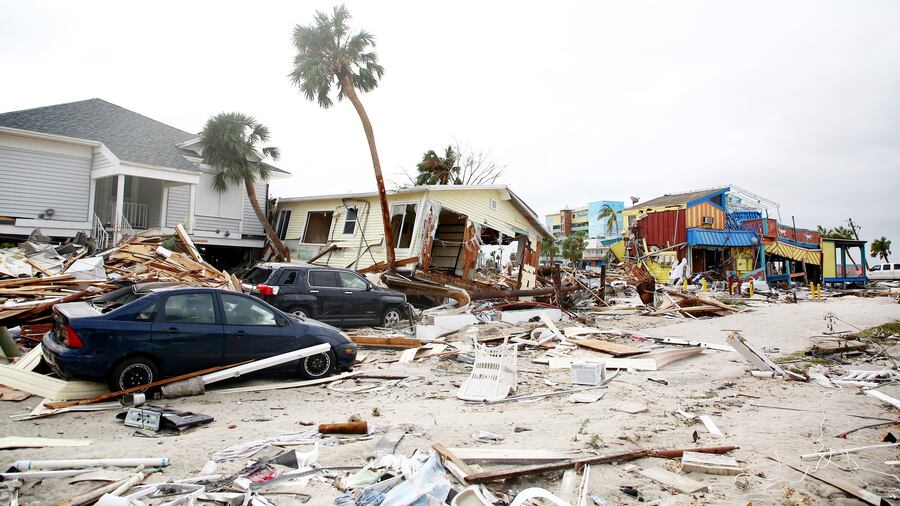
After the back-to-back hurricanes, Tampa homes experienced widespread and compounded damage, largely because the second storm hit before many properties had fully recovered from the first.
Here’s what actually happened on the ground:
1. Widespread Flooding in Residential Areas
Many Tampa neighborhoods saw repeated flooding. Soil and drainage systems were already saturated, so even moderate rainfall during the second hurricane caused water to enter homes that had avoided flooding during the first storm.
- Water entered through doors, garages, and foundations
- Low-lying areas flooded multiple times
- Standing water remained longer than usual
2. Roof Failures and Interior Water Damage
Thousands of homes had temporary roof repairs or tarps after the first hurricane. When the second storm arrived:
- Tarps failed under high winds
- Previously weakened roofs leaked again
- Ceilings, walls, and insulation were soaked
This led to interior damage spreading into rooms that were previously unaffected.
3. Rapid Mold Growth Inside Homes
Because Tampa is hot and humid, moisture left behind after the first storm created the perfect environment for mold. The second hurricane made conditions worse.
- Mold began forming within 24–48 hours
- Hidden mold developed behind drywall and flooring
- Air quality inside homes declined, causing health concerns
4. Structural Weakening
Repeated water exposure caused long-term structural issues, including:
- Softened drywall and warped flooring
- Wood framing absorbing moisture
- Foundations under stress from prolonged saturation
Some homes that initially seemed repairable later required major restoration or partial rebuilds.
5. Prolonged Power and Utility Outages
Back-to-back storms slowed utility repairs:
- Power remained out for extended periods
- HVAC systems were damaged by water and debris
- Refrigeration failures led to food loss inside homes
Without electricity, drying homes properly became difficult.
6. Insurance and Recovery Delays
Homeowners faced challenges with recovery:
- Multiple insurance claims for separate storms
- Delays due to high claim volume across Florida
- Shortage of local contractors and restoration crews
This left many Tampa homes unlivable for weeks or months.
The Overall Impact
In short, Tampa homes didn’t just suffer storm damage—they suffered layered damage. The second hurricane amplified existing problems, turning minor issues into major restoration projects.
Bottom line:
Back-to-back hurricanes pushed many Tampa homes from simple repairs into full-scale restoration, affecting safety, health, and long-term property value..