

🏠 U.S. Real Estate Market — 2025 in Review
📉 Market Normalization & Cooling
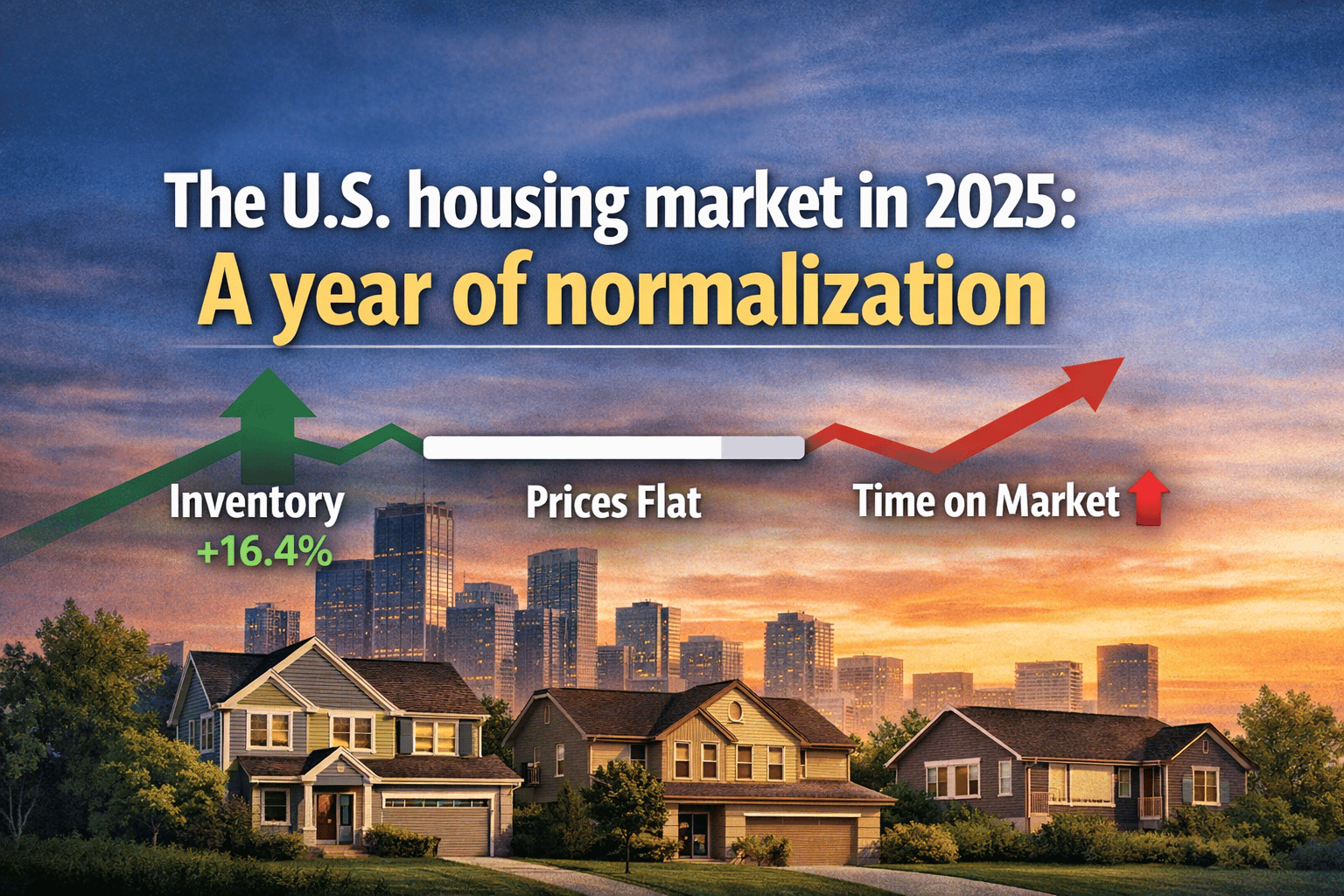
The U.S. housing market in 2025 shifted more toward balance after years of extreme price growth. Inventory increased significantly — up over 16% year-over-year — which helped relieve some pricing pressure and lengthened market times.
Even though prices kept rising overall, growth was very modest compared with pandemic-era surges:
- Median prices rose only slightly (or even flattened in parts of the country).
- Price growth slowed to decade-low rates by late 2025.
- Many metros saw either flat prices or slight declines.
This reflected a shift from a sellers’ frenzy toward a more balanced, selective market.
📊 Key 2025 Market Metrics
Inventory & days on market:
- Inventory grew meaningfully — giving buyers more options.
- Days on market increased compared with previous years.
Sales:
- Home sales remained relatively low nationwide as high prices and mortgage rates kept many buyers sidelined.
- In markets like Tampa Bay, sales activity hit new lows in 2025 compared with the year before.
Prices:
- National price increases were mild — down to their slowest pace in over a decade.
- Some forecasts even projected modest price declines in certain regions.
🧠 What Drove the 2025 Real Estate Trends
Several major forces shaped the market in 2025:
▶️ High Mortgage Rates
Rates stayed elevated (~6%+) for much of the year, making big monthly payments harder for buyers and reducing demand.
▶️ Buyers & Sellers Locked In
Many homeowners chose not to sell because they hold low-rate mortgages from prior years — this “rate lock” slowed overall market activity.
▶️ Increasing Inventory
More homes came on the market — particularly in Sun Belt areas — giving buyers more choice and easing intense competition.
▶️ Regional Divergence
While some areas stayed competitive, others cooled sharply. Affordability and local job trends drove wide divergences.
📍 Tampa & Florida Real Estate 2025
📊 Tampa Bay Snapshot
According to local market data:
- Median sale price in Tampa hovered around $372,000 in 2025.
- Homes spent an average of about 52 days on market — longer than tighter markets of previous years.
- Supply in Tampa Bay was more ample than in some hotter national markets.
This mirrors the national trend of slower growth, higher inventory, and more buyer negotiating power.
🧭 Florida Market Trends
Across the state:
- The overall Florida market cooled in 2025 as sustained high rates weighed on demand.
- Early signs late in the year suggested possible rebounds as mortgage rates started easing and more buyers re-entered the market.
🔍 Wider National Themes
📌 Buyers Gained More Leverage
With more listings and slower price growth, buyers had more negotiating power than in recent peak years — especially if they were patient and pre-approved.
📌 Sellers Needed Strategy
For sellers, pricing accurately and staging became even more important as the market shifted from urgency to balance.
📌 Rental & Investment Dynamics
Rental demand remained strong, and many markets saw increased interest in long-term and single-family rentals as ownership affordability lagged.
🧠 What This Means for Real Estate Going Forward
Looking ahead to 2026 and beyond:
- Mortgage rates are expected to gradually ease, which could spur some increase in sales.
- Affordability might improve slowly as prices flatten and wage growth continues.
- Inventory trends suggest the market will stay more balanced, rather than heavily favoring buyers or sellers exclusively.
📌 Top Takeaways — 2025 Housing Market
✔️ The housing market normalized, with inventory rising and price acceleration slowing dramatically.
✔️ Buyers gained more leverage than in recent years, even amid persistent affordability challenges.
✔️ Tampa Bay and many Sun Belt metros reflected the broader cooling trend.
✔️ Sales remained historically low as rate lock and buyer caution dominated decisions.

Recent Posts

Event Promotion — Filling the Room and Creating Buzz

Event Production — Turning Plans Into a Live Experience